
Last verified 16 Sep 2026 · Sources
Salad dressing’s Reference Amount Customarily Consumed is 30 g (about 2 tbsp), while mayonnaise and sandwich spreads get their own smaller RACC of 15 g, roughly 1 tbsp (21 CFR 101.12). Neither one qualifies for the FDA’s insignificant-nutrient exemption: dressings and mayonnaise are built around oil, so fat, saturated fat, and usually sodium show up in real amounts on every panel. The trap most likely to catch you isn’t the serving size itself, it’s the composition standard tied to the name on your front label: call your product “mayonnaise” or “salad dressing” and you’ve committed to a specific minimum oil and egg content under 21 CFR Part 169, whether or not that was the intent. A Nutrition Facts panel is required on essentially every commercially sold dressing or mayonnaise, since none of the required nutrients come in insignificant amounts.
| Quick facts | Salad dressing |
|---|---|
| Regulator | FDA |
| Reference amount (RACC) | Dressings for salads, 30 g; mayonnaise/sandwich spreads, 15 g |
| Typical serving statement | 2 tbsp (30 g) |
| Typical label format | Standard vertical for most bottles; tabular or linear if total labelable surface area is 40 sq in or less and the bottle can't fit a standard vertical column |
| Exemption | Not exempt: dressings and mayonnaise reliably carry more than insignificant fat, saturated fat, and sodium, so 101.9(j)(4) does not apply |
| Watch out for | Sodium and saturated fat %DV; a bottle between 200% and 300% of the 30 g RACC needs a mandatory per-serving/per-container dual column |
| Common allergens | Egg (mayonnaise and creamy dressings), soy or fish (some vinaigrettes and Worcestershire-based dressings), milk (buttermilk ranch), sesame in tahini-based dressings |
What is the serving size for salad dressing? The FDA serving for salad dressing is 2 tbsp (30g). See the full serving-size reference: single-serving cut-off, dual-column range, and servings per package.
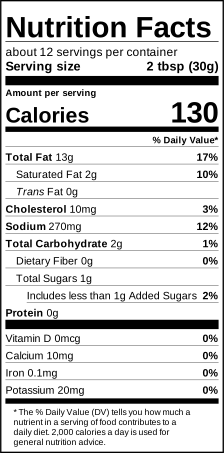
Serving size: what the RACC gives salad dressing
The 30 g reference amount for “dressings for salads” covers vinaigrettes, ranch, Italian, Caesar, and other pourable or creamy dressings; convert it to a label statement using the closest realistic household measure, typically “2 tbsp (30 g).” Mayonnaise and sandwich spreads use a separate 15 g RACC (21 CFR 101.12), about 1 tbsp, reflecting that mayonnaise is usually spread thin rather than poured over a salad.
Package size drives the single-serving and dual-column rules from there. An 8 fl oz bottle of dressing (roughly 227 g, well over 300% of the 30 g RACC) is labeled with standard per-serving values and a servings-per-container count, with no dual column required, since it’s far past the 300% ceiling in 21 CFR 101.9(b)(12)(i). A small single-serve dressing cup around 30–44 g (100–150% of RACC) is packaged and sold individually and, per 101.9(b)(6), is declared as one serving covering the entire container. A single-serve packet sized between roughly 60 g and 90 g (200–300% of the RACC) is the size range where the mandatory per-serving/per-container dual column actually applies, a size your to-go dressing cups or small squeeze packets can land in before you notice.
What the panel must show
The 15 mandatory nutrients under 21 CFR 101.9(c) apply in full: calories, total fat, saturated fat, trans fat, cholesterol, sodium, total carbohydrate, dietary fiber, total sugars, added sugars, protein, vitamin D, calcium, iron, and potassium. For dressings, total fat and saturated fat are usually the largest %DV numbers on the panel given the oil content required by the standards of identity, and sodium is close behind in most commercial recipes. Added sugars matter for sweeter dressings like honey mustard or French-style vinaigrettes. The %DV footnote and standard rounding rules under 101.9(c) apply throughout: fat above 5 g rounds to the nearest gram, for instance, which is relevant given how much of a 30 g serving is oil.
Format: which layout your package qualifies for
Most bottled dressings use the standard vertical Nutrition Facts format. Bottles or pouches with 40 sq in or less of total labelable surface area can use a tabular layout under 21 CFR 101.9(j)(13)(ii), or a linear format if the surface area is under 12 sq in or the shape can’t accommodate a tabular block, relevant for small single-serve cups and squeeze packets. The NutriLabels builder renders standard vertical, tabular, linear, simplified, and both dual-column variants (per serving/per container, and as prepared for any dressing mix sold dry), plus bilingual EN/ES labels.
Salad dressing-specific traps
The standards of identity in 21 CFR Part 169 are the trap you may not see coming: § 169.140 requires at least 65% vegetable oil by weight plus egg yolk-containing ingredients to be called “mayonnaise,” and § 169.150 requires at least 30% oil plus a starchy paste to be called “salad dressing.” A lower-oil, egg-free vinaigrette should generally be labeled something else, like “vinaigrette” or “dressing,” rather than borrowing either standardized name. (French dressing previously had its own standard at § 169.115, but that section no longer appears in the current Part 169.) Acidified-food processing rules under 21 CFR Part 114, including the requirement to hold a finished equilibrium pH at or below 4.6, apply to shelf-stable dressings that combine low-acid ingredients (egg, dairy) with an acid, but Part 114 explicitly excludes foods “stored, distributed, and retailed under refrigeration,” so a refrigerated-only dressing can sit outside those filing requirements even when a shelf-stable version of the same recipe would not.
Ingredient statement and allergens
Ingredients are listed in descending order by weight under 21 CFR 101.4, with sub-ingredients of components like a vinegar blend or cheese powder broken out as needed. Egg is a near-universal allergen concern for mayonnaise and creamy dressings; soy and fish (from Worcestershire sauce or anchovy paste in Caesar dressing) show up often, and milk appears in buttermilk-based ranch. Tahini-based dressings carry sesame, the ninth major allergen added by the FASTER Act effective January 1, 2023. Any of the nine major allergens present must appear in a “Contains” statement under FALCPA.
Build the label
Choosing a name that matches your dressing’s real oil and egg content keeps the front of your bottle and the back telling the same story. Enter your recipe, then see your dressing’s label: your calories, the claims you qualify for and your allergen line are free, no card required, and every other value and %DV stays hidden until you unlock it. $29 unlocks every other nutrient value and %DV, every FDA format your product qualifies for, and the ingredient statement and allergen declaration, ready to print. Start your salad dressing label, or browse other product labels.
Salad dressing label FAQ
What serving size do I use for a bottle of vinaigrette?
21 CFR 101.12 sets the reference amount for dressings for salads at 30 g, which is close to 2 tbsp for most vinaigrettes and creamy dressings. That's your legal serving size regardless of how a recipe portions it.
Why does mayonnaise get a smaller serving size than dressing?
Mayonnaise and sandwich spreads have their own RACC of 15 g (about 1 tbsp), separate from the 30 g "dressings for salads" category, reflecting that mayonnaise is typically used in smaller amounts per use.
Does my salad dressing qualify for the insignificant-nutrient exemption?
No. Dressings and mayonnaise are formulated to carry meaningful fat, saturated fat, and sodium, which rules out the 101.9(j)(4) exemption that covers products like plain spices or coffee beans.
Is my dressing a "mayonnaise" or a "salad dressing" under FDA rules?
21 CFR 169.140 defines mayonnaise by a minimum 65% vegetable oil and egg yolk content, while 21 CFR 169.150 defines salad dressing with a lower 30% minimum oil plus a starchy paste. Using either name on the label ties you to that standard's composition requirements.
Does refrigerating my dressing change which food-safety rules apply?
Often yes. 21 CFR Part 114's acidified-food requirements, including the 4.6 pH ceiling, explicitly exclude foods stored, distributed, and sold under refrigeration, so a refrigerated dressing may sit outside Part 114 even though a shelf-stable version of the same recipe would need to comply.
What happens if my dressing bottle holds close to 3 servings?
A single bottle packaged and sold individually between 200% and 300% of the 30 g RACC (roughly 60–90 g, or about 2–3 fl oz) triggers the mandatory per-serving/per-container dual column under 21 CFR 101.9(b)(12)(i).
Related products
Spice blends and seasonings, Soup, Granola. See the full all products.
Sources
- ecfr.gov/current/title-21/chapter-I/…-101/subpart-A/section-101.9
- ecfr.gov/current/title-21/chapter-I/…101/subpart-A/section-101.12
- ecfr.gov/current/title-21/chapter-I/…69/subpart-B/section-169.140
- ecfr.gov/current/title-21/chapter-I/…69/subpart-B/section-169.150
- ecfr.gov/current/title-21/chapter-I/subchapter-B/part-114
- fdc.nal.usda.gov/food-details/173592/nutrients