
Last verified 16 Sep 2026 · Sources
Popcorn is one of the few foods FDA singles out by name inside 21 CFR 101.9 itself: it uses the standard 30 g “snacks, all varieties” reference amount from 21 CFR 101.12, but the regulation carves out a separate dual-column rule just for it (21 CFR 101.12; 21 CFR 101.9). FDA is the regulator, no state or USDA overlap. The trap you’re most likely to hit is treating microwave popcorn (sold unpopped, meant to expand) the same as a ready-to-eat bagged snack. They follow different rules under 21 CFR 101.9(b)(12). A Nutrition Facts panel is required on virtually any packaged popcorn sold at retail or wholesale.
| Quick facts | Popcorn |
|---|---|
| Regulator | FDA |
| Reference amount (RACC) | 30 g (snacks, all varieties, incl. popcorn) |
| Typical serving statement | about 3 1/2 cups popped (30 g) |
| Typical label format | Standard vertical for most bags; dual-column as-packaged/as-prepared for microwave popcorn instead of the per-serving/per-container format |
| Exemption | Not exempt |
| Watch out for | Microwave popcorn labels "as prepared" per cup popped, not per-container dual column |
| Common allergens | Usually none in plain popcorn; butter/cheese flavoring can add milk, soy |
What is the serving size for popcorn? The FDA serving for popcorn depends on the weight of one piece. See the full serving-size reference: single-serving cut-off, dual-column range, and servings per package.
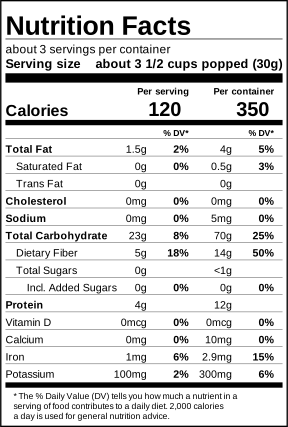
Serving size: what the RACC gives popcorn
Popcorn sits under “snacks: all varieties, chips, pretzels, popcorn, extruded snacks, fruit/vegetable chips” at 30 g (21 CFR 101.12). Because popcorn expands so much when popped, 30 g of popped corn translates to roughly 3 1/2 cups, but that ratio depends heavily on how fully and densely your batch pops, so a household measure like “about 3 1/2 cups popped (30 g)” is a starting point to verify against your own product, not a fixed constant. For ready-to-eat bagged popcorn (already popped, sold by weight), the standard container-size math applies: a small 1 oz (28 g) snack bag is under 100% of RACC and gets the single-serving treatment under 21 CFR 101.9(b)(6); a larger 2.5 oz (71 g) bag lands around 236% of RACC, in the 200%–300% band that would normally trigger the per-serving/per-container dual column under 21 CFR 101.9(b)(12)(i), unless it qualifies for the popcorn-specific exception described below.
What the panel must show
All mandatory nutrients apply: calories, total fat, saturated fat, trans fat, cholesterol, sodium, total carbohydrate, dietary fiber, total sugars, added sugars, protein, vitamin D, calcium, iron, potassium, with %DV footnotes per 21 CFR 101.9(c). Sodium and saturated fat are the ones that matter most for popcorn: butter, oil, and cheese-powder coatings can push both well above what a plain kernel would suggest, and fiber is worth highlighting since air-popped corn is naturally fiber-dense. Rounding follows the standard 21 CFR 101.9(c) increments (nearest 5 calories below 50, nearest 10 above; 0.5 g fat increments below 5 g).
Format: which layout your package qualifies for
This is where popcorn gets its own rule. 21 CFR 101.9(b)(12)(i)(C) excludes “popcorn products that provide an additional column of nutrition information per 1 cup popped popcorn” from the standard 200%–300% dual per-serving/per-container requirement that would otherwise apply (21 CFR 101.9). In practice, that’s built for microwave popcorn: because the package holds unpopped kernels (an “as prepared” food under 21 CFR 101.9(e)), you can label nutrition per the unpopped RACC plus an additional column showing values per 1 cup popped, and that popped-cup column satisfies the disclosure need without triggering the separate per-container dual column. Ready-to-eat bagged popcorn is different: it’s already in its final, consumed form, so there’s no “as prepared” step and no popped-cup column to lean on. A ready-to-eat bag that falls between 200% and 300% of the 30 g RACC follows the ordinary dual per-serving/per-container rule like any other snack. Small packages (40 sq in or less of labeling surface, shape that can’t fit a standard column) can use tabular or linear format under 21 CFR 101.9(j)(13)(ii); the NutriLabels builder renders standard vertical, tabular, linear, and dual-column as-packaged/as-prepared layouts, which covers the microwave-popcorn case. What it doesn’t render: aggregate labels for variety packs mixing flavors. That’s expert-service territory.
Popcorn-specific traps
The as-prepared vs. per-container distinction above is the single biggest trap: if your microwave popcorn label defaults to a standard per-serving/per-container dual column instead of the popped-cup column, you’re doing more work than the rule requires, and doing it in a way that can misstate the popped serving size. The second trap is flavoring-driven allergens: plain popcorn carries none of the nine major allergens, but butter and cheese powders bring milk, and some seasoning blends use soy lecithin or soy flour, so the allergen declaration has to track the specific flavor SKU, not just “popcorn.” Simplified format is rarely available here (21 CFR 101.9(f) requires insignificant amounts of eight or more nutrients), since popcorn’s fat, sodium, fiber, and carbohydrate levels typically disqualify flavored versions.
Ingredient statement and allergens
List ingredients in descending order by weight: corn (and any oil it’s popped in) first for microwave popcorn, then salt, butter flavor, or cheese powder as applicable. Ready-to-eat bagged popcorn lists its coating ingredients the same way. Follow with a “Contains” statement for milk, soy, or any of the other seven major allergens present in the flavoring, including sesame if a seasoning blend uses it, per the FASTER Act.
Build the label
Picking the popped-cup column or the dual column to match how your popcorn is sold means your label shows the serving a customer actually eats. Enter your recipe, then see your popcorn label: free with no card required, you see your calories, the claims you qualify for, your allergen line and the nutrient to watch, and every other value and %DV stays hidden until you unlock it. $29 unlocks every other nutrient value and %DV, the as-prepared or dual-column format your package actually needs, and a compliant ingredient statement and allergen declaration, ready to print, with 12 months of edits included and downloads that never expire. Start your popcorn label, or check the serving sizes for other snacks.
Popcorn label FAQ
What's the legal serving size for popcorn?
FDA's RACC for popcorn falls under "snacks, all varieties" at 30 g (21 CFR 101.12); for popped popcorn that's roughly 3 1/2 cups, though actual cup weight varies with how densely it's popped, so weigh a sample of your own product.
Why does microwave popcorn show an "as prepared" column instead of per-container?
21 CFR 101.9(b)(12)(i)(C) specifically excludes popcorn products that provide an additional column of nutrition per 1 cup popped from the standard 200%–300% dual per-serving/per-container requirement, so microwave bags label unpopped weight plus a popped-cup column instead.
Does ready-to-eat bagged popcorn get the same exception?
Not automatically. That carve-out is built for products that require preparation (unpopped kernels) and choose to add a per-cup-popped column; already-popped, ready-to-eat bags follow the standard RACC-based rules like any other snack, including the 200%–300% dual-column requirement if the bag falls in that range.
Is popcorn a good candidate for the simplified format?
Rarely for flavored popcorn. Simplified format under 21 CFR 101.9(f) requires insignificant amounts of eight or more nutrients, and popcorn's fat, sodium, fiber, and carbohydrate levels usually disqualify it; plain air-popped corn comes closer but still needs a careful nutrient-by-nutrient check.
What allergens does popcorn typically carry?
Plain popcorn has none of the nine major allergens, but butter, cheese, or caramel coatings commonly add milk, and some seasoning blends add soy. Always check your specific flavoring's ingredients.
How many servings are in a typical microwave popcorn bag?
It depends on the bag's unpopped weight and how the "as prepared" per-cup-popped column is set up: a single 3.2 oz (91 g) bag commonly yields around 9 to 11 cups popped, which you would express across several RACC-sized "as prepared" servings.
Related products
Chips (potato, tortilla, vegetable), Crackers, Candy, Trail mix and nuts. See the full all products.