
Last verified 16 Sep 2026 · Sources
Crackers get their FDA serving size from 21 CFR 101.12, but the category splits in a way that is easy to get wrong: crackers usually used as snacks get a 30 g reference amount (RACC), while crackers not used as snacks, plus melba toast and hard bread sticks, get 15 g. Both fall under FDA, not USDA. The single most common mistake is defaulting to 30 g for every cracker, including saltines and other utility crackers that FDA’s own reference-amount guidance actually places in the 15 g group. A Nutrition Facts panel is required on packaged crackers sold at retail unless the package is small enough to qualify for the surface-area exemption covered below.
| Quick facts | Crackers |
|---|---|
| Regulator | FDA |
| Reference amount (RACC) | 30 g (Crackers usually used as snacks); 15 g (Crackers not used as snacks, melba toast, hard bread sticks) |
| Typical serving statement | 16 crackers (30 g) for snack crackers; 5 crackers (15 g) for saltines |
| Typical label format | Standard vertical for most boxes; tabular or linear for small single-serve sleeves 40 sq in or less |
| Exemption | Not exempt |
| Watch out for | Picking the wrong 30 g vs 15 g RACC category; sodium %DV on salted crackers |
| Common allergens | Wheat is nearly universal; check for milk, soy, sesame seeds, and tree nuts in seed/nut crackers |
What is the serving size for crackers? The FDA serving for cracker depends on the weight of one piece. See the full serving-size reference: single-serving cut-off, dual-column range, and servings per package.
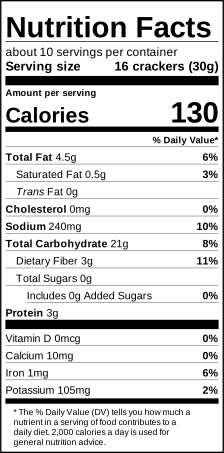
Serving size: what the RACC gives crackers
21 CFR 101.12’s reference amount table lists “crackers usually used as snacks” at 30 g and “crackers not used as snack, melba toast, hard bread sticks” at 15 g, without spelling out every product name in the rule text itself. FDA’s nonbinding reference-amounts guidance fills in the examples: the 15 g group includes saltines, soda crackers, oyster crackers, crisp breads, rice crackers (excluding rice cracker snack mixes), melba toast, hard bread sticks, and puffed cereal-grain cakes; the 30 g group is everything else, including flavored snack crackers, sandwich crackers (cheese, peanut butter), and sweet crackers like graham or animal crackers (FDA reference-amounts guidance, media/102587). You turn either into a label statement as a whole-cracker count plus grams (“16 crackers (30 g)” for a snack cracker, “5 crackers (15 g)” for saltines), sized so the count lands close to the RACC in grams. For package-size rules: a box of snack crackers sold as a single stack contains far more than 200% of either RACC, so it’s a standard multi-serving vertical label with servings-per-container stated as a number, not a single- or dual-column case.
What the panel must show
The full mandatory list under 21 CFR 101.9(c) applies: calories, total fat, saturated fat, trans fat, cholesterol, sodium, total carbohydrate, dietary fiber, total sugars, added sugars, protein, vitamin D, calcium, iron, and potassium, each with %DV, plus the standard or abbreviated Percent Daily Value footnote. Sodium is the number that matters most for crackers. Salted snack and soda crackers commonly run 700–950 mg per 100 g, and it rounds to the nearest 5 mg between 5 and 140 mg per serving and to the nearest 10 mg above that (21 CFR 101.9(c)). Whole-grain and seed crackers often carry meaningful dietary fiber, which rounds to the nearest gram, or “Contains less than 1 gram” below that threshold. Added sugars in a cracker recipe (a sweet glaze, a touch of sugar in the dough) come from your own formulation, not a database. Declare the actual amount your recipe adds.
Format: which layout your package qualifies for
A standard cracker box uses a standard vertical panel. A small single-serve sleeve or snack pack with 40 sq in or less of available labeling surface may use a tabular layout under 21 CFR 101.9(j)(13)(ii)(A), or a linear (string) layout if the surface is under 12 sq in or the shape genuinely can’t accommodate a tabular block. A tiny cracker pack under 12 sq in with no nutrition claims can skip the panel entirely under 21 CFR 101.9(j)(13)(i), as long as it carries a phone number or address for nutrition information. NutriLabels’ builder renders standard vertical, tabular, and linear formats for cracker packaging.
Crackers-specific traps
The 30 g/15 g category split is the defining trap for this product: get it wrong and every %DV on the panel is off, since %DV is calculated per labeled serving. Claims like “whole grain,” “low sodium,” or “good source of fiber” each carry their own FDA numeric threshold and should be checked before they go on a cracker box. Crackers marketed for a specific diet (keto, gluten-free) add a layer of substantiation on top of the base nutrition panel that a food-labeling attorney is worth consulting on if the claim is central to your brand. Crackers sold “as prepared” (a cracker mix that needs baking) would carry an additional “as prepared” column under 21 CFR 101.9(e), but that’s uncommon for retail cracker products, which are almost always sold ready to eat.
Ingredient statement and allergens
List ingredients in descending order by weight. A basic snack cracker typically starts “Enriched wheat flour, vegetable oil, salt,” with any compound ingredient (a seasoning blend, a cheese powder) broken into its own sub-ingredients. Wheat is close to universal in crackers and is one of the 9 major allergens under FALCPA, so a “Contains wheat” statement is standard unless the product is genuinely wheat-free (rice crackers, some seed crackers). Watch for milk in cheese and butter crackers, soy in oils and lecithin, sesame seeds on topped crackers (a major allergen since January 1, 2023 under the FASTER Act), and tree nuts in nut-and-seed cracker blends.
Build the label
Choosing the right 30 g or 15 g category up front means every %DV on your box is right from the first print. Enter your recipe, then see your cracker label: free with no card required, you see your calories, the claims you qualify for, your allergen line and the nutrient to watch, and every other value and %DV stays hidden until you unlock it. $29 unlocks every other nutrient value and %DV, every FDA format your package size qualifies for, and the ingredient statement and allergen declaration, all included. Start your label, or compare both cracker categories in the serving sizes guide.
Crackers label FAQ
Are all crackers labeled with the same serving size?
No. 21 CFR 101.12 splits crackers into two reference amounts: 30 g for crackers usually used as snacks and 15 g for crackers not used as snacks, melba toast, and hard bread sticks. So the right one depends on what kind of cracker you're making.
Which serving size applies to saltines?
FDA's nonbinding reference-amount guidance lists saltines, soda crackers, oyster crackers, crisp breads, and rice crackers under the 15 g "not usually used as snacks" category, alongside melba toast and hard bread sticks.
Which crackers use the 30 g serving size?
The 30 g category covers crackers usually eaten as snacks on their own, including flavored snack crackers, sandwich crackers, and sweet crackers like graham or animal crackers, per FDA's reference-amount guidance.
What format can a small cracker sleeve use?
A single-serve sleeve or pack with 40 sq in or less of labeling surface can use a tabular layout under 21 CFR 101.9(j)(13)(ii), or a linear layout if the surface is under 12 sq in or can't fit a tabular block.
Do crackers need a "Contains wheat" statement?
Almost always, yes. Wheat flour is the base of most crackers and wheat is one of the 9 major allergens under FALCPA, so it goes in the "Contains" statement unless the product is genuinely wheat-free.
Related products
Chips (potato, tortilla, vegetable), Bread, Cheese, Pasta (dry and fresh). See the full all products.