
Last verified 16 Sep 2026 · Sources
Dry pasta’s legal serving size is set, not chosen: 55 g dry (140 g prepared as the reference for the cooked form), under the “Pastas, plain” category of 21 CFR 101.12, with no separate line for fresh or refrigerated pasta. On a box that’s a statement like “2 oz (56 g),” and a 1-lb box works out to roughly 8 servings. The regulator is plain FDA nutrition labeling (21 CFR 101.9), layered on the older standard of identity for macaroni and noodle products in 21 CFR Part 139, a rule you may never have opened. The biggest mistake we see: basing a fresh-pasta serving size on the 55 g dry figure when fresh pasta was never dried, so that reference doesn’t apply to it. A Nutrition Facts panel is required on essentially every packaged pasta product unless it fits a narrow exemption in 101.9(j). Plain pasta itself carries none of the “insignificant nutrient” exemptions some spices or plain coffee get.
| Quick facts | Pasta (dry and fresh) |
|---|---|
| Regulator | FDA |
| Reference amount (RACC) | Pastas, plain | 140 g prepared; 55 g dry |
| Typical serving statement | 2 oz dry (56 g) or about 1 1/4 cup cooked (140 g) |
| Typical label format | Standard vertical for boxed dry pasta; tabular or linear only if the package's surface area is 40 sq in or less and shape won't take a standard column |
| Exemption | Not exempt: pasta is a standardized food under 21 CFR Part 139 with routine nutrition claims and mandatory labeling |
| Watch out for | Dry-weight vs prepared-weight serving basis; egg noodles need ≥0.5% egg solids to legally use "noodle" (21 CFR 139.150) |
| Common allergens | Wheat (gluten); egg in egg noodles; check for soy or dairy in filled/flavored fresh pasta |
What is the serving size for pasta (dry and fresh)? The FDA serving for pasta depends on the weight of one piece. See the full serving-size reference: single-serving cut-off, dual-column range, and servings per package.
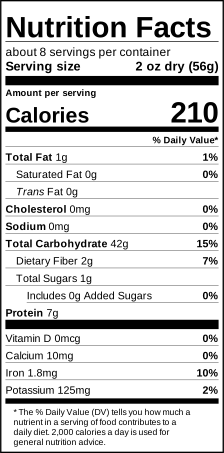
Serving size: what the RACC gives pasta
FDA’s Table 2 entry for “Pastas, plain” gives a reference amount of 140 g prepared; 55 g dry (verified against the current 21 CFR 101.12 text). For dry pasta (what nearly everyone in a box or bag sells), your serving size is built off the 55 g figure, turned into a household measure: “1/2 cup (55 g)” for short shapes, or “2 oz (56 g)” for long strand pasta. A 1-lb (454 g) box comes out to about 8 servings (454 ÷ 55 ≈ 8.3, rounded per 101.9(b)).
Fresh, refrigerated pasta is where you’re most likely to get tripped up, because there’s no separate “fresh pasta” row. FDA’s reference-amounts guidance clarifies the fix: for an unprepared form not listed separately (the guidance names “fresh and frozen pasta” explicitly), “the reference amount for the unprepared form… is the amount required to make the reference amount of the prepared form” (fda.gov/media/102587/download). You determine how much of your fresh, uncooked pasta yields 140 g once cooked, and that weight is your serving size. Measure your product’s actual cook yield rather than guessing.
Package math that bites here: a 9 oz (255 g) box is roughly 255 ÷ 55 ≈ 4.6 servings, about 464% of the RACC. That is well past the single-serving rule (under 200% = one serving, 101.9(b)(6)) and past the 200–300% range where dual per-serving/per-container columns under 101.9(b)(12)(i) can apply, so a box like this carries a standard per-serving panel.
What the panel must show
All mandatory nutrients in 21 CFR 101.9(c) apply: calories, total fat, saturated fat, trans fat, cholesterol, sodium, total carbohydrate, dietary fiber, total sugars, added sugars, protein, vitamin D, calcium, iron, and potassium. For plain pasta, total carbohydrate (40+ g per 55 g dry serving), protein, and iron (from the enrichment premix) move most; sodium matters if you salt the dough. Added sugars run 0 for plain pasta. For a sweetened or filled product, remember that figure comes from your recipe, not the database alone. Round per 101.9(c): calories to the nearest 5 or 10, fat/protein to the nearest 0.5 g under 5 g, sodium to the nearest 5 mg under 140 mg. The %DV footnote is required except on tabular-abbreviated or linear panels (101.9(d)(9)).
Format: which layout your package qualifies for
A standard 1-lb pasta box comfortably clears the 101.9(j)(13)(ii) 40 sq in threshold, so it uses the standard vertical format the NutriLabels builder renders by default. Small single-serve pasta cups or pouches under 40 sq in may use tabular format under 101.9(j)(13)(ii)(A), and a package under 12 sq in whose shape can’t take a tabular display may use linear instead, both rendered by the builder. A package under 12 sq in with no nutrition claims could qualify for the small-package exemption in 101.9(j)(13)(i), but any nutrient content claim removes it.
Pasta-specific traps
Plain macaroni is a standardized food under 21 CFR 139.110: base ingredients are limited to semolina, durum flour, farina, or flour combined with water, with egg white optional at 0.5–2.0% solids. That’s a food-identity rule, not a labeling rule, but it constrains your ingredient statement: you can’t call something “macaroni” from a different base. Egg noodles carry their own floor: 21 CFR 139.150(a) requires not less than 0.5 percent egg solids by weight of finished-product solids to use “noodle” on the label at all. Fall short and you can’t call it a noodle. Gluten-free claims follow FDA’s separate rule at 21 CFR 101.91, not Part 139, worth flagging for a rice- or legume-based pasta alternative. Fresh refrigerated pasta also raises a shelf-life question outside nutrition labeling; talk to a food-safety consultant or your state regulator about refrigeration and dating for your formulation.
Ingredient statement and allergens
List ingredients by descending predominance by weight (21 CFR 101.4): semolina or flour first, then water, then egg for egg pasta or any inclusions. Wheat is a FALCPA major allergen and must appear in the “Contains” statement or be clear in the ingredient list (e.g., “durum wheat semolina”); if you make egg pasta, egg is a separate major allergen in the same statement. Cheese, spinach, or a flavored filling can bring in milk, soy, or (under the FASTER Act) sesame, folded into the same nine-allergen line since 2023.
Build the label
Sizing your serving from the right reference (dry, or cooked for fresh pasta) the first time saves reprinting boxes you already paid for. Enter your recipe, then see your label: free with no card required, you see your calories, the claims you qualify for, your allergen line and the nutrient to watch, and every other value and %DV stays hidden until you unlock it. $29 unlocks every other nutrient value and %DV, every FDA format your pasta package qualifies for, and the ingredient statement and allergen declaration built from the same serving size, ready to print. Start your label, or check the serving sizes for other foods.
Pasta (dry and fresh) label FAQ
Do I label dry pasta by the dry weight or the cooked weight?
Both appear in the reference amount, but your serving statement is by dry weight: 55 g dry, expressed as a household measure like "2 oz (56 g)." The 140 g prepared figure exists so you can size a "cooked" cup measure if you choose to add one, but it's not the basis for a dry-pasta panel.
Does fresh refrigerated pasta use a different serving size than dry?
No separate fresh-pasta reference amount exists in 21 CFR 101.12. Per FDA's RACC guidance, an unprepared form like fresh or frozen pasta uses "the amount required to make the reference amount of the prepared form," so you back into your serving size from 140 g cooked, not from the 55 g dry figure.
Can I call my product "egg noodles" without much egg in it?
No. 21 CFR 139.150(a) requires noodle products to contain not less than 0.5 percent egg solids by weight of the finished product's solids (the enriched-noodle version, 139.155, carries the same floor) to use "noodle" on the label at all.
Is plain pasta exempt from a Nutrition Facts panel?
Only if it qualifies under the small-package or retailer exemptions in 21 CFR 101.9(j); "insignificant nutrient" exemptions in 101.9(j)(4) don't apply to pasta since it isn't nutritionally insignificant. Most boxed and bagged pasta needs a full panel.
What allergens do I need to declare for pasta?
Wheat is a FALCPA major allergen and must appear in the ingredient list and, if present, the "Contains" statement. Egg is a separate major allergen for egg noodles; check any seasoning, filling, or coating for milk, soy, or sesame under the FASTER Act.
Does a small fresh-pasta pouch qualify for a simplified layout?
Only if it has insignificant amounts of eight or more of the mandatory nutrients (six for infant/child foods) per 21 CFR 101.9(f); pasta carries meaningful carbohydrate, protein, and often sodium and fiber, so it almost never qualifies for the simplified format.
Related products
Tortillas (corn and flour), Crackers, Soup, Cheese. See the full all products.
Sources
- ecfr.gov/current/title-21/chapter-I/…101/subpart-A/section-101.12
- ecfr.gov/current/title-21/chapter-I/…-101/subpart-A/section-101.9
- ecfr.gov/current/title-21/chapter-I/…39/subpart-B/section-139.110
- ecfr.gov/current/title-21/chapter-I/…39/subpart-B/section-139.150
- fdc.nal.usda.gov/food-details/169736/nutrients
- fda.gov/media/102587/download